The Weaker U.S. Dollar Creates Opportunities for International Companies
Currency cycles create winners and losers. For international companies considering expansion in the United States, the current weakness in the U.S. dollar opens a strategic window.
The U.S. dollar declined sharply in 2025, and the weakness continued into early 2026. Many economists expect the trend to persist. This exchange-rate movement creates a strategic advantage for international companies with stronger home currencies. American assets become cheaper. Acquisitions cost less. Expanding U.S. operations requires fewer euros, pounds, yen, or kroner. For many international executives, this shift represents a strategic opportunity to scale faster in the world’s largest market.
However, this opportunity comes with a notable trade-off. While entry costs are lower, performance expectations increase. A weaker dollar puts more pressure on U.S. subsidiaries to grow revenue, improve margins, and execute faster and more effectively.
How Much Has the Dollar Declined?
Over the past 13 months, the U.S. dollar has declined by 9%, according to the U.S. Federal Reserve. (The Fed’s index tracks the U.S. dollar against a basket of currencies from a broad group of its trading partners, including all European countries, BRIC members, Canada, and Mexico.) The U.S. dollar hasn’t been this low in four years.
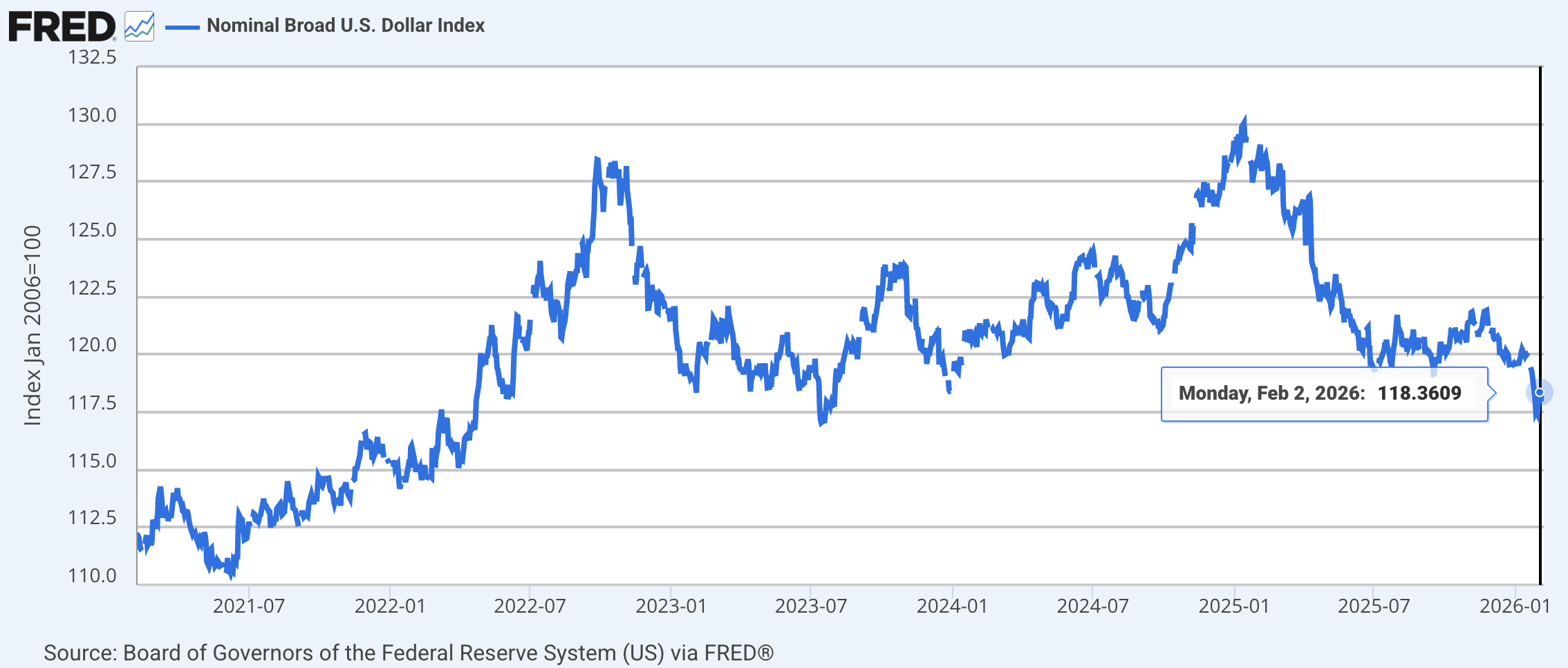
The U.S. dollar tracked against a wide basket of foreign currencies.
The U.S. dollar’s movement against the Euro is particularly important given the depth of European trade and investment in the United States. From January 2025 to February 2026, the U.S. dollar declined by approximately 12.7% against the Euro. Economists propose that this is primarily due to divergent monetary policies. The European Central Bank held interest rates steady for longer to combat persistent inflation, while the U.S. Federal Reserve began cutting rates in early 2025 to stimulate a cooling economy.
American Assets Are Effectively “On Sale”
The weaker dollar has mixed implications for the U.S. economy. It makes U.S. exports more competitive abroad, as American goods become cheaper for foreign buyers. At the same time, imports become more expensive for U.S. consumers. Moreover, tariffs have exacerbated the rising cost of imported goods in many categories.
Stronger foreign currencies increase purchasing power in the U.S. market. International investors can acquire U.S. stocks, real estate, and entire companies at a relative discount. As a result, 2025 saw a remarkable increase in cross-border acquisitions of American businesses.
Notable Acquisitions in 2025
The Ferrero Group bought WK Kellogg for $3.1 billion in July. The Italian company with brands including Kinder, Nutella, and Tic Tac, generated €19.3 billion in revenue last year. The acquisition expanded Ferrero’s U.S. footprint through iconic American brands such as Kellogg’s Frosted Flakes, Fruit Loops, and Rice Krispies.

Investindustrial, a European investment group with €17 billion in assets, purchased Treehouse Foods for $2.9 billion. Treehouse is one of the largest manufacturers of private-label products, including Walmart’s Great Value, Amazon’s 365 Organic, and Target’s Good & Gather. The all-cash deal took the company private, delisting it from the New York Stock Exchange. It expanded Investindustrial’s global portfolio of companies, which includes Eataly, Jacuzzi, and Zegna.
It’s Now Cheaper to Do Business
The weaker dollar also reduces the cost of operating in the United States for international companies. Over the past year, many foreign companies have expanded their U.S. operations by hiring more workers, opening new facilities, and investing in equipment and infrastructure.
Producing goods in the United States can also help international companies avoid tariffs on imported products. While the high tariff rates announced in Washington, D.C., in April 2025 have fluctuated, imported products have incurred a 10-20% additional cost for consumers.
Several notable U.S. Expansions in 2025
Siemens AG, headquartered in Germany, expanded its U.S. manufacturing capacity by adding new production lines and advanced equipment across multiple U.S. plants. It is investing $285 million to build two factories to produce electrical equipment to meet America’s growing power demand, particularly with the rapid growth of AI data centers. (Siemens Press Release, March 25, 2025)
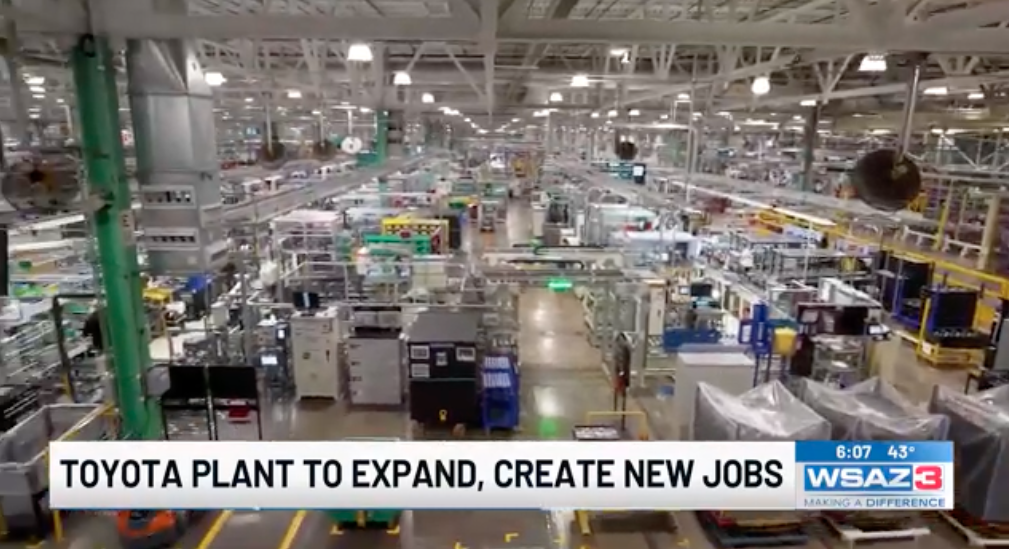
Several foreign automakers expanded their U.S. operations to capitalize on the weak U.S. dollar and avoid tariffs. Hyundai Motor Group of South Korea significantly expanded its U.S. manufacturing capacity, including new facilities and advanced automation. Toyota, based in Japan, is investing more than $900 million to expand its U.S. facilities in five U.S. states. (Toyota Press Release, November 2025)
Higher Performance Pressure
While a weaker U.S. dollar lowers entry and expansion costs, it increases pressure on U.S. subsidiaries to achieve higher profits and do so more quickly. The primary reason is that revenue generated in U.S. dollars must be converted into the international company’s home currency at the end of each reporting period. When the U.S. dollar weakens, U.S. revenue translates into fewer euros, kroners, pounds, or yens. Hence, the need to improve performance and generate greater revenue and profit in the United States.
For example, consider a French luxury goods company operating a U.S. subsidiary. If the dollar declines 12% against the euro, revenue generated in the United States will translate into 12% fewer euros when consolidated into the parent company’s financial statements, assuming no price increases or hedging strategies.
Even if U.S. sales volume remains stable, reported results in the home currency decline. That puts pressure on U.S. leadership to increase prices, improve margins, or accelerate growth.
Requires Better Planning and Execution
Even with a favorable exchange rate, doing business in the United States is rarely easy. As discussed in Make It In America: How international companies and entrepreneurs can successfully enter and scale in U.S. markets, the United States is one of the most demanding and competitive markets in the world. Despite favorable exchange rates, it remains expensive to do business in the United States. Legal, accounting, real estate, information technology (IT), and marketing costs are generally higher than in most countries.
International companies that succeed in the United States have products that better meet the needs and wants of demanding American consumers. They invest in strong brands and high-quality resources, including local marketing and sales talent. They have clear go-to-market strategies, strong local leadership, scalable operating models, and disciplined execution.
The weak U.S. dollar can improve the odds of success, but it does not replace the need for thoughtful, strategic planning and operational excellence.
Final Thoughts
The current currency environment makes this an attractive moment for international companies to expand, acquire, or launch in the United States. American assets are relatively discounted, and operating locally can improve competitiveness while reducing tariff exposure.
At the same time, the weaker dollar raises expectations. International companies must offset currency pressure with stronger performance, faster execution, and sharper strategic focus.
For those prepared to meet that challenge, the opportunity is real, and the timing may be difficult to ignore.